Stormwater runoff can pollute our waterways, flood our neighborhoods, and even threaten our lives. One effective way to reduce these impacts is by managing rain close to where it falls. A few landscape-based strategies that capture, slow, and absorb rainwater are highlighted below.
Rain Gardens
Rain gardens are shallow, planted depressions designed to collect rainwater and allow it to slowly infiltrate into the soil. They can capture runoff from rooftops, downspouts, slopes, or bioswales. Rain gardens should be built into an existing slope rather than in a natural low spot, as they are designed to drain within 24–48 hours. An overflow outlet is also important to safely release excess water during large storm events. Rain gardens should be located at least 10 feet away from building foundations to prevent water damage. When properly designed, rain gardens do not create mosquito problems — standing water drains too quickly for mosquitoes to complete their breeding cycle.
Bioswales
Bioswales are gently sloped channels designed to collect, slow, and move stormwater across a site. They are often used to direct runoff toward rain gardens or other infiltration areas while reducing the speed and volume of flowing water. Because water actively moves through bioswales, they must be carefully designed to prevent erosion. Dense plantings play a critical role by slowing water flow, stabilizing soil, filtering pollutants, and increasing infiltration.
Lawn Replacement
If you don’t have the space for — or simply don’t want — a rain garden or bioswale, an excellent alternative is replacing turf grass with a dense, diverse mix of perennials, ornamental grasses, shrubs, and trees. While rain gardens and bioswales are highly effective, they are more specialized features that require thoughtful placement, design, and ongoing maintenance.
In contrast, landscapes simply planted densely with a variety of plants are more flexible and tens to require less long-term care. Leaves and stems help intercept rainfall and soften its impact, while deep, extensive root systems guide water into the soil. Over time, these roots also improve soil structure, reducing runoff and erosion and supporting healthier, more resilient landscapes.
Rain Garden Plants
Plants are a critical component of rain gardens because they help absorb water, stabilize soil, and improve infiltration. It is important to choose plants that can survive wet soils after storms and drier conditions between rainfall. Species with dense, fibrous root systems are especially valuable, as they help hold soil in place and enhance water movement into the ground. Native plants are often the best choice, as many are well adapted to these conditions while also supporting local wildlife and strengthening ecosystems.
For best results, choose a diverse mix of native plant species. Varying plant heights and root depths allow rainfall to be intercepted at multiple levels. This diversity also enhances seasonal interest and maximizes ecological benefits throughout the year. Planting densely is equally important — closely spaced plants help stabilize soil, reduce erosion, and suppress weeds.
Rain Gardening at Brightside
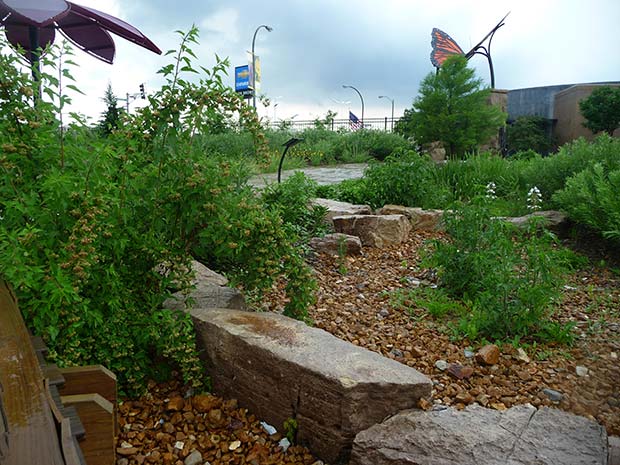
The Brightside Demonstration Garden features a large bioswale that directs water into an expansive rain garden. While it is larger than most home rain gardens, it allows visitors to see stormwater management in action. The garden also showcases many areas of dense, diverse plantings that collect, slow, and absorb rainwater. Come take a look for ideas that you can apply to your own home landscape.
Create Your Own Sustainable Landscape
Explore the pages below to discover additional ways to manage stormwater.
Resources
Consider your soil type – clay or well-drained soil – and be sure to select the right plants for your rain garden depending on how wet the soil will stay. Find the right plants for your soil type in the Grow Native! Native Plant Rain Gardens guide.
To learn more about rainscaping, building a rain garden, and what’s right for your yard or project area, check out the Missouri Botanical Garden’s RainScaping Guideand Shaw Nature Reserve’s Rain Gardening and Storm-Water Management Manual.
Learn what you can do to prevent urban storm water runoff from polluting our streams and rivers.
Use The Green Values Stormwater Toolbox and Stormwater Management Calculator to learn about storm water management practices and compare the performance, costs and benefits of low-impact development to conventional storm water practices.
East-West Gateway Council of Governments explores St. Louis rainscaping projects.
EPA shares Tools, Strategies and Lessons Learned from EPA Green Infrastructure Technical Assistance Projects.